
VisionLab-IA-Drone
How can a drone reliably identify a person in mid-flight, in the middle of a crowd
or over a wide area? Thanks to a unique combination of computer vision, biometric models,
and optimized flight paths, our solution first detects human presence, isolates the face,
and then performs a reliable identification in seconds.
or over a wide area? Thanks to a unique combination of computer vision, biometric models,
and optimized flight paths, our solution first detects human presence, isolates the face,
and then performs a reliable identification in seconds.











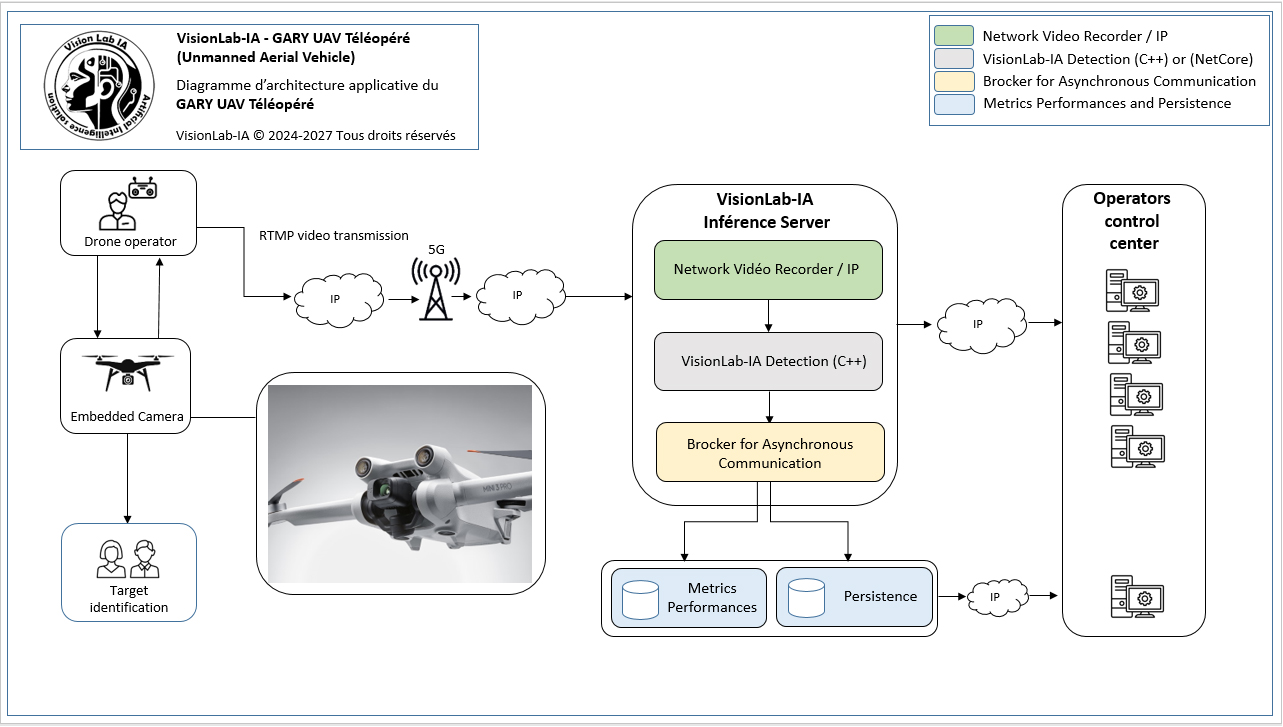
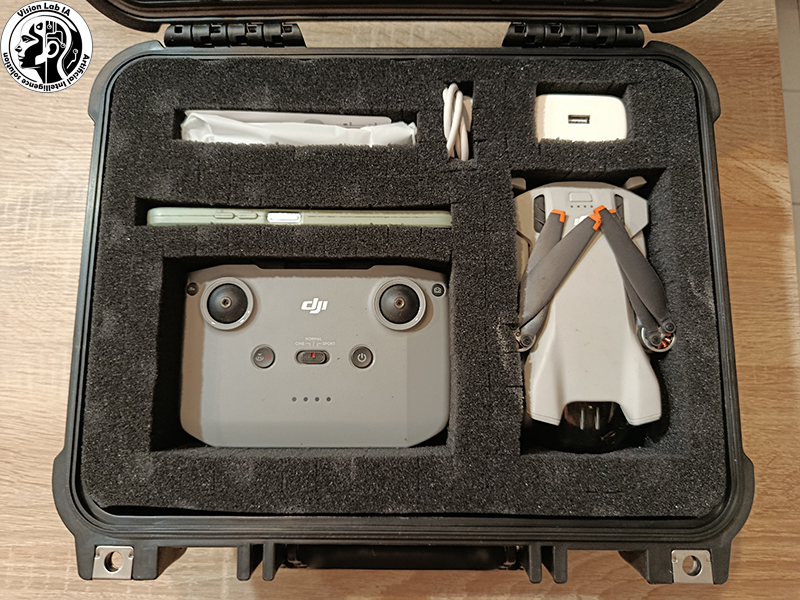
GARY Remotely Operated UAV
Our remotely operated UAV relies on several technological layers that must work together smoothly and in real time.
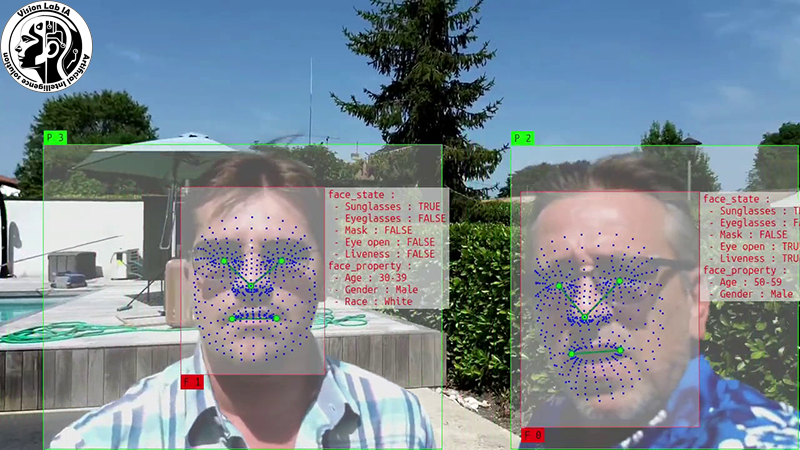
The drone, equipped with high-resolution cameras, begins by analyzing the video stream to detect the presence of humans, then isolates faces in the image, regardless of their size or orientation. This is a crucial preliminary step.
1. People and face detection:
The drone, equipped with high-resolution cameras, begins by analyzing the video stream to detect the presence of humans, then isolates faces in the image, regardless of their size or orientation. This is a crucial preliminary step.
2. Facial recognition (identification):
Once a face is detected, the software kicks in. It analyzes approximately 80 unique facial features (distance between the eyes, cheek shape, etc.) to create a digital "facial fingerprint." This fingerprint is then compared in real time to a database of known faces to try to identify the person.
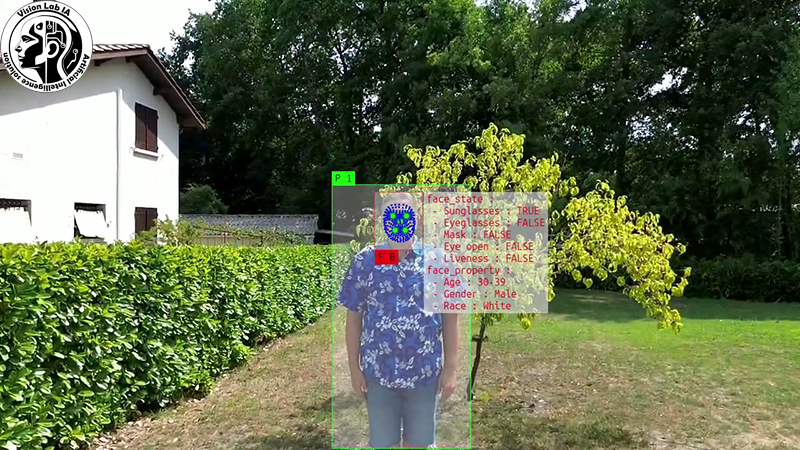
3. The challenge of aviation:
This is the most complicated part. Unlike a fixed camera, a drone is in motion, at different altitudes, from various angles, and in changing lighting conditions. Capturing an image of sufficient quality for reliable identification is a real technical challenge. To overcome this, powerful cameras with zoom capabilities are used, along with algorithms capable of correcting angles, and flight paths are optimized to obtain the best possible shots.