
VisionLab-IA-Drone
How can a drone reliably identify a person in mid-flight, in the middle of a crowd
or over a wide area? Thanks to a unique combination of computer vision, biometric models,
and optimized flight paths, our solution first detects human presence, isolates the face,
and then performs a reliable identification in seconds.
or over a wide area? Thanks to a unique combination of computer vision, biometric models,
and optimized flight paths, our solution first detects human presence, isolates the face,
and then performs a reliable identification in seconds.











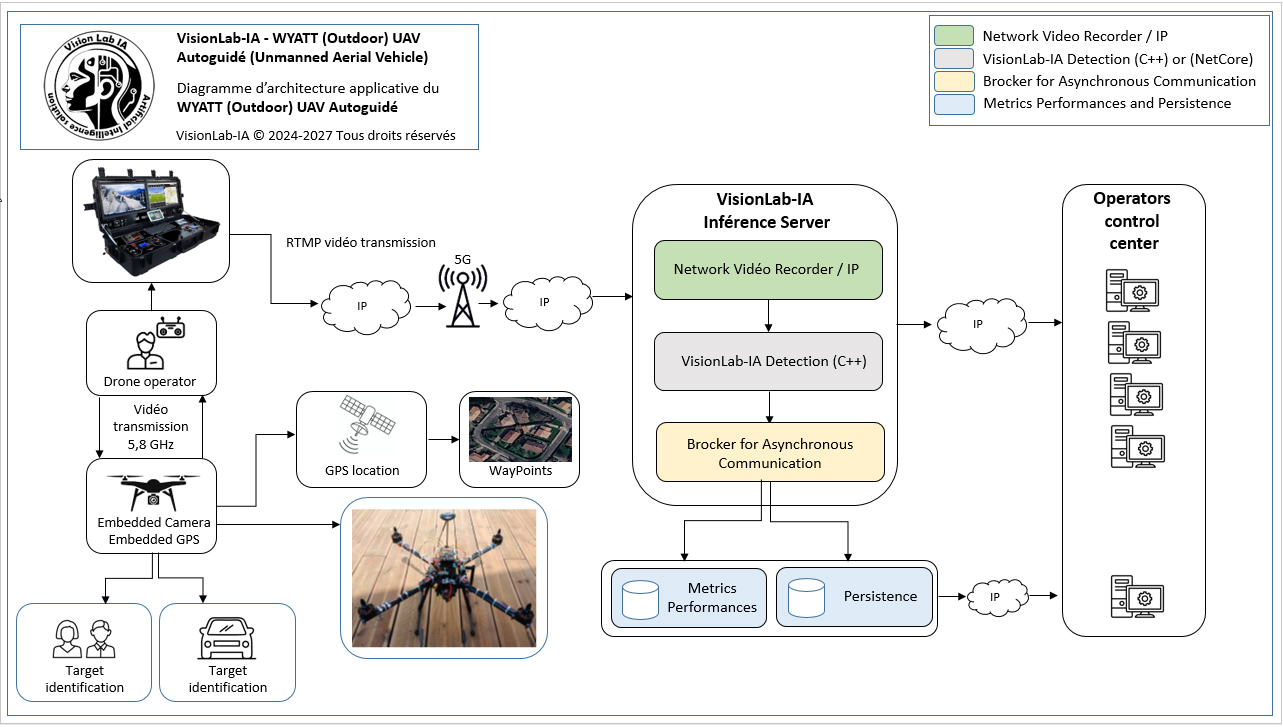
WYATT (Outdoor) Autoguided UAV
An autonomous drone is a complex system that combines hardware and software to navigate without constant human intervention.
Its operation relies on a continuous loop of perception, planning, and action.
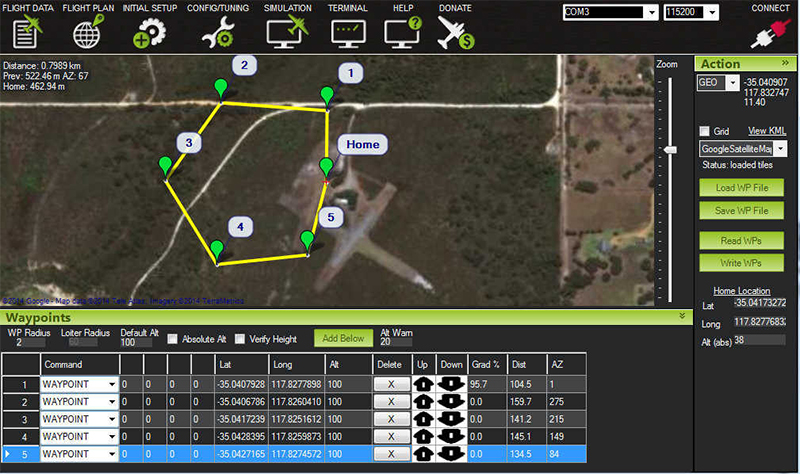
Even before taking off, the drone is assigned a mission. This mission is created using ground-based software. A series of checkpoints, called waypoints, are defined there, outlining the path to be followed.
This flight plan is then sent to and stored in the drone's memory. Upon takeoff, the autopilot begins executing this program, point by point.
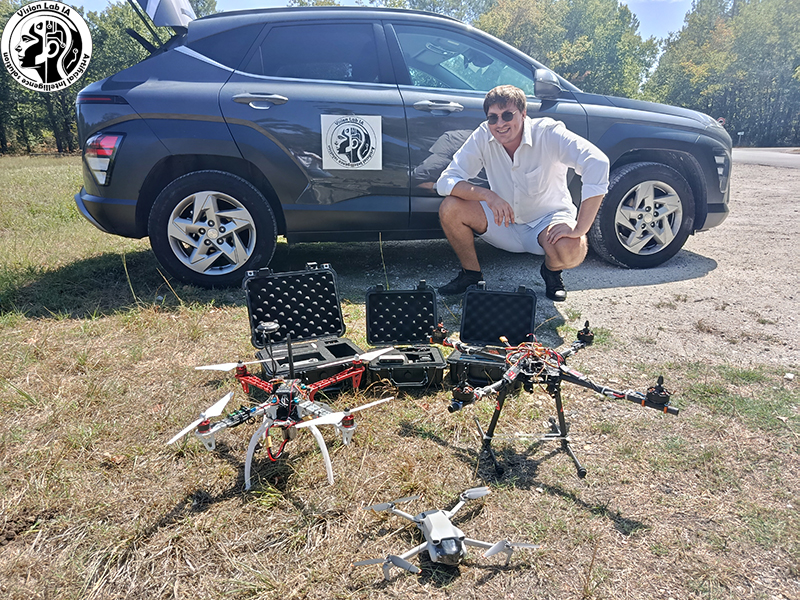
1. The flight plan: the mission before takeoff
Even before taking off, the drone is assigned a mission. This mission is created using ground-based software. A series of checkpoints, called waypoints, are defined there, outlining the path to be followed.
This flight plan is then sent to and stored in the drone's memory. Upon takeoff, the autopilot begins executing this program, point by point.
2. The autopilot and the brain: the flight controller
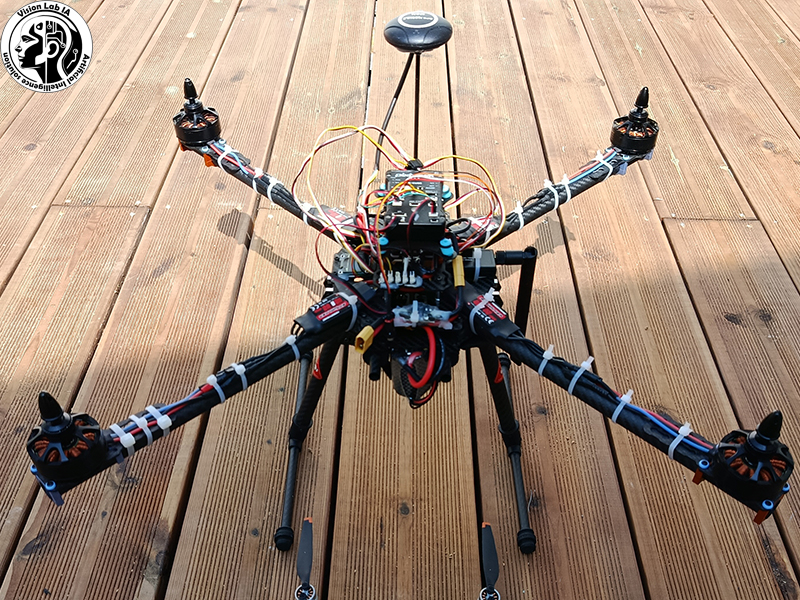
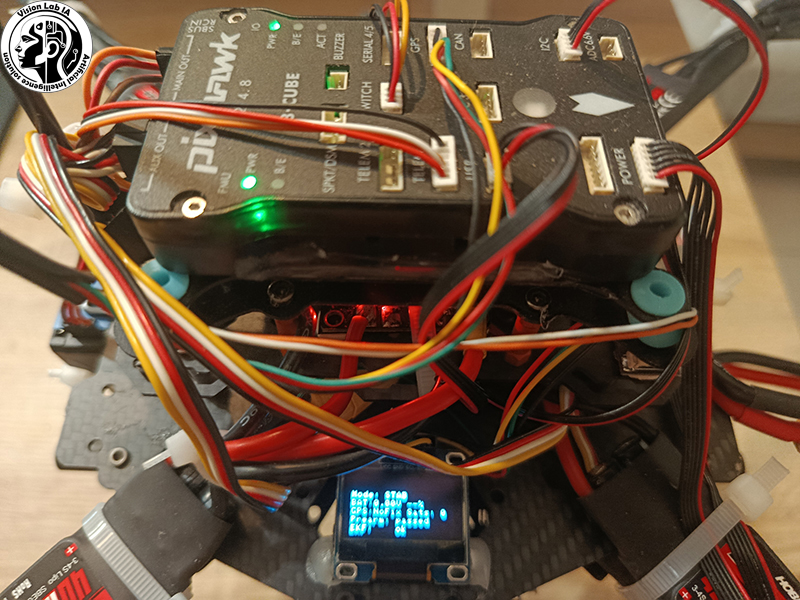
The heart of the system is the flight controller, an onboard computer that runs the autopilot software. This brain has two main roles:
High level navigation: He reads the mission, calculates the heading and speed to adopt to reach the next waypoint.
Low-level control: It translates these instructions into immediate actions on the motors. To do this, it uses control algorithms (often PID) that adjust the power of each motor in real time to keep the drone stable and on its trajectory.
3. Perception: the eyes and senses of the drone
To orient itself and adapt, the drone is equipped with multiple sensors:
- GPS: Essential for knowing your absolute position in the world and following waypoints.
- Inertial Measurement Unit (IMU): Measures accelerations and rotations, allowing for continuous correction of position and attitude.
- Additional Sensors: Cameras, lidar, or sonar are added to detect obstacles, ensure perfect stability, or even navigate without GPS.
4. The system in action: from intention to movement
The process is a continuous loop:
- Sensor reading: The flight controller reads data from the GPS, IMU, etc.
- Comparison: It compares its actual position and speed to those it should have according to the flight plan.
- Correction calculation: The control algorithm calculates the necessary adjustments (for example, tilting the drone forward).
- Action: It sends commands to the motors to execute these corrections.